Review: Set of 9 Cat Valentine Embroidery for Craft Fairs
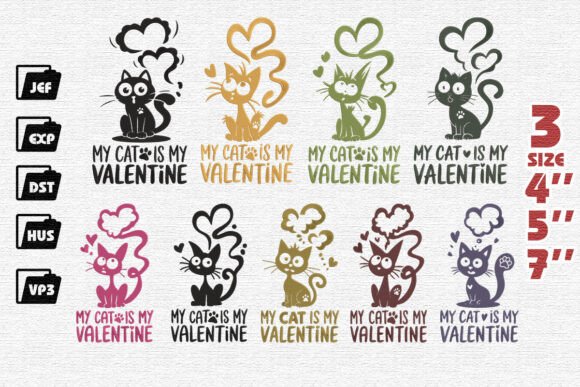
As an embroidery designer who has spent countless weekends behind a booth table, I know that the difference between a slow day and a sold-out display often comes down to design selection. When I first loaded the Set of 9 Cat Valentine Embroidery into my software, my immediate reaction was one of relief. In the saturated market of holiday crafts, finding designs that balance cuteness with commercial viability is a challenge. This collection feels distinctly modern yet approachable, hitting that sweet spot between playful feline charm and romantic sentiment without veering into overly complex or cheesy territory.
First Impressions and Visual Appeal
The visual language of this set is crucial for craft fair product success. The designs appear bold enough to be seen from three feet away—a critical factor when customers are scanning rows of booths. They do not feel cluttered. Instead, they offer a clean, decorative aesthetic that works well for both farmhouse-style kitchens and modern boutique aesthetics. For an Etsy seller or a small shop owner, this versatility is gold. You are not limiting your customer base to just one niche; you are appealing to cat lovers, Valentine’s Day gift shoppers, and anyone who appreciates high-quality handmade product details.
The romantic elements are subtle rather than overwhelming. This allows the machine embroidery design to remain relevant beyond February 14th if marketed correctly as "love" or "friendship" themes, extending the shelf life of your inventory. However, for the peak season, these patterns scream seasonal relevance, which drives impulse buys.
Product Application and Versatility
Where does this digital embroidery file truly shine? I tested the concepts mentally against various blanks, and the results were promising. Here is how I would deploy these nine designs in a real-world production scenario:
- Tote Bag Design: A large central motif from the set works beautifully on canvas totes. The stitch density appears sufficient to cover the weave of standard cotton canvas without sinking in, creating a premium look.
- Apron Embroidery: Placing a smaller design on the bib of a half-apron creates an instant bestseller. It is personal, practical, and giftable.
- Tea Towel Embroidery: This is perhaps the strongest application. The linear nature of many cat poses fits perfectly along the hem or corner of a flour sack towel. It adds value to a low-cost blank.
- Embroidered Patch: If the designs are self-contained, they make excellent iron-on patches. These are low-commitment purchases for browsers who love the art but do not need a full garment.
- Caps and Pouches: Smaller accents from the set can adorn curved cap surfaces or zippered pouches, provided you adjust the stabilizer appropriately.
For those creating printable mockup assets for online listings, these designs photograph exceptionally well. The contrast between typical thread colors and neutral fabrics creates a sharp image that stops the scroll on social media feeds.
Production Practicality and Batch Selling
From a business standpoint, repeatability is key. A small shop product line needs to be efficient to produce. This set seems designed for speed. The shapes are likely optimized to minimize jump stitches and trim changes, which is vital when you are hooping twenty aprons for a weekend market. If you are engaging in commercial embroidery, time is money. Designs that are too dense take longer to stitch and use more thread, eating into margins. These patterns strike a balance, offering visual impact without excessive run times.
However, practical judgment is required. Before committing to a large batch, you must check the specific hoop size requirements for each of the nine designs. Some may fit in a 4x4 inch hoop, while others might require a 5x7 or larger. Consistency in hoop usage can streamline your workflow, so plan your product mix accordingly.
Careful-Use Notes and Technical Considerations
While the designs are strong, no embroidery file is universal without testing. Here are critical technical notes for any designer using this set:
- Fabric Texture: Textured towels can distort small details. Ensure the stitch density is high enough to stand out against the loop of a terry cloth or the weave of linen.
- Dark Fabric: If stitching on black or navy, verify that the design includes underlay stitches to prevent the fabric from showing through the lighter thread colors. You may need to adjust your thread colors for better visibility.
- Small Details: Tiny whiskers or facial features can get lost if the design is scaled down too much. Always test a sample on scrap fabric at the exact size you intend to sell.
- Stabilizer Choice: For stretchy fabrics like tote bags or caps, a cut-away stabilizer is often safer than tear-away to prevent distortion over time. For woven tea towels, a tear-away usually suffices.
- Curved Surfaces: When applying these to caps, use a frame specifically designed for curved surfaces to avoid puckering.
Enhancing Brand Consistency and Buyer Engagement
Using a cohesive set like the Set of 9 Cat Valentine Embroidery helps build brand recognition. When customers see multiple items featuring the same artistic style, it signals professionalism and intentionality. It transforms individual items into a curated collection. This strengthens your booth display, making it look fuller and more inviting.
Buyer engagement increases when they can mix and match. A customer might buy a tea towel for themselves and a tote bag for a friend because the designs complement each other. This cross-selling opportunity is a direct result of using a unified design assets package.
Final Designer Recommendations
Before you list these as a finished product or sell the digital embroidery file itself, take these final steps. First, confirm the commercial licensing terms. Just because you bought the set does not always mean you can sell the stitched items without checking the specific license included with the download. Second, create at least one real physical mockup. Photos of actual stitched items convert far better than digital renders alone.
Check the spacing between elements to ensure no threads overlap incorrectly. Inspect the stitch density to ensure it is not too heavy for lightweight fabrics. Finally, compare how the designs look on different fabric colors to offer your customers variety.
In conclusion, this collection is a robust tool for any creative entrepreneur looking to capitalize on the Valentine’s market. It balances aesthetic appeal with production efficiency, making it a smart addition to your library of Valentine S Day and everyday Embroidery resources. With careful testing and strategic product placement, these nine designs can become some of the most profitable items in your craft fair lineup.